Yu the Great
Introduction
Yu the Great, also known as Dayu, is a legendary figure in Chinese history and mythology, renowned for his extraordinary achievements in flood control and for founding the Xia Dynasty (c.21st century-16th century BC), the first dynasty in Chinese history. His story blends myth and history, embodying the perseverance and ingenuity of ancient Chinese civilization. Yu's legacy has been preserved through folklore, historical records, archaeological evidence, and cultural depictions, making him a household name in China and an influential figure in East Asian history.
Life and Achievements
Early Life
Yu the Great's early life is shrouded in mystery, with limited information available in ancient texts. Legends suggest that Yu was raised by Zhulong, a half-human, half-snake deity, after his father, Gun, was executed for stealing the Heavenly King's magic soil to stop floods. These mythical accounts emphasize Yu's divine connections and his destined role as a hero who would overcome natural disasters. Despite the mix of myth and history, Yu's upbringing is often depicted as preparing him for his monumental task of controlling the floods and leading the people.
Flood Control Efforts
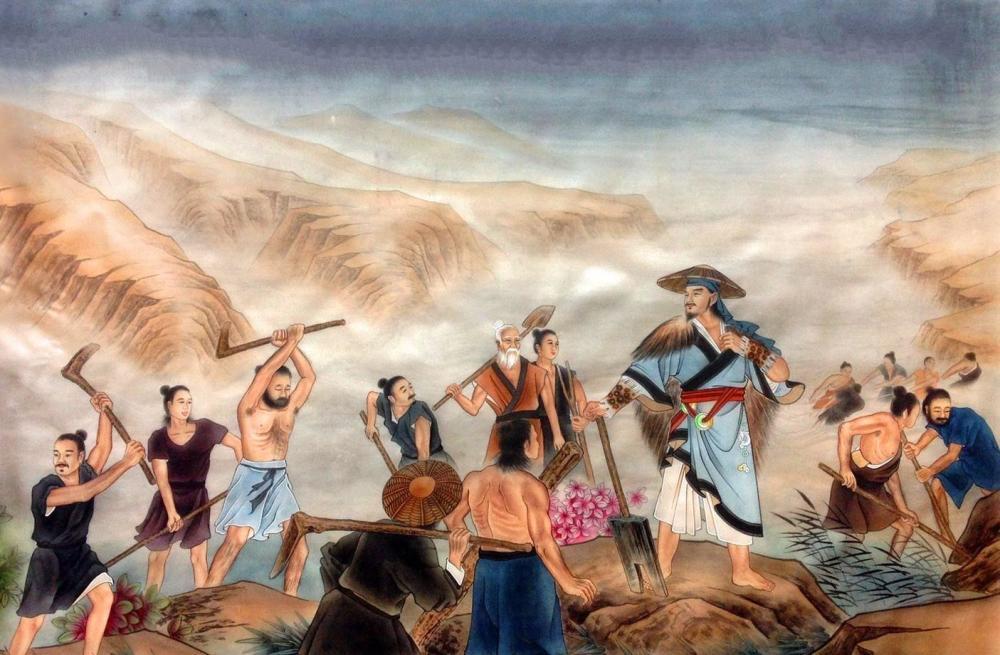
Yu the Great is most famous for his monumental efforts in controlling the devastating floods of the Yellow River. Unlike his father, who failed in his attempts to stop the flooding, Yu adopted a pragmatic and innovative approach. He dredged and rearranged the river channels, creating a network of waterways that effectively redirected the floodwaters. Yu's dedication to this mission was legendary; he reportedly worked tirelessly for years, even passing by his home without stopping to see his family. His efforts not only saved countless lives but also laid the foundation for agricultural prosperity and societal stability.
Establishment of the Xia Dynasty
After successfully controlling the floods, Yu the Great's leadership and contributions earned him widespread respect and recognition. He was chosen as the leader of the tribes and eventually established the Xia Dynasty, marking the beginning of dynastic rule in China. The Xia Dynasty is considered a pivotal era in Chinese history, transitioning from tribal alliances to centralized governance. Yu's reign was characterized by advancements in agriculture, irrigation, and social organization, solidifying his legacy as a founding figure of Chinese civilization.
Legacy and Cultural Significance
Yu the Great's legacy extends far beyond his achievements in flood control and governance. He is celebrated as a moral symbol of perseverance, diligence, and selflessness. His story has inspired generations of Chinese people to face challenges with courage and unity. Yu's influence is also evident in East Asian cultures, particularly in Japan and South Korea, where his legends and cultural artifacts have left a lasting impact.
Yu's story has been preserved through various forms of cultural expression, including dance dramas, animated series, and historical records. For instance, the dance drama "King Yu," directed by Wang Ge, brings Yu's story to life on stage, blending historical research with artistic creativity. Similarly, the animated series "Shan Hai Chuan Qi" explores Yu's youth and mythical encounters, offering a fresh perspective on his legend. These cultural depictions highlight Yu's enduring relevance and his role as a unifying figure in Chinese history.
Archaeological Evidence
Archaeological discoveries have provided valuable insights into the historical context of Yu the Great and the Xia Dynasty. The Erlitou site in Luoyang, Henan province, is widely regarded as the closest link to the Xia Dynasty. Covering an area of 3 square kilometers, the site features remains of palaces, altars, tombs, and ceremonial artifacts, indicating a highly developed civilization. Recent findings, such as multigrid layouts and drainage systems, suggest advanced urban planning and governance during Yu's era.
Other significant discoveries include the ruins of Yuhui village in Bengbu, Anhui province, where Yu is believed to have built dams along the riverbank. The site features remnants of human settlements and drainage systems, supporting the historical accounts of Yu's flood control efforts. Additionally, the Shizhuang site in Zhoukou, Henan province, reveals evidence of barns and fortified cities, shedding light on early government structures and food security systems.
These archaeological findings not only corroborate the legends of Yu the Great but also enrich our understanding of the Xia Dynasty's cultural and societal development.
Depictions in Art and Literature
Yu the Great's story has been a source of inspiration for artists and writers throughout history. From ancient texts like the "Shan Hai Jing" and "Shiji" to modern dance dramas and animated series, Yu's legend has been adapted and reimagined in various forms. His achievements are celebrated in temples, monuments, and cultural festivals, serving as a reminder of his enduring legacy.
One notable depiction is the giant statue of Yu the Great at Yuantuojiao scenic spot in Jiangsu province. Standing 20 meters tall, the statue symbolizes Yu's heroic efforts in flood control and his role as a unifying figure in Chinese history. The scenic spot also features other attractions, such as the Yinyang Tower and artificial lake, highlighting Yu's cultural significance.
In literature, Yu's story is often intertwined with themes of perseverance, leadership, and innovation. His achievements are celebrated in poems, historical records, and folklore, emphasizing his role as a foundational figure in Chinese civilization.
Yu the Great's legacy continues to inspire and resonate with people across generations, reflecting the timeless values of resilience and unity that he embodies.








